ANI
06 Oct 2025, 17:40 GMT+10
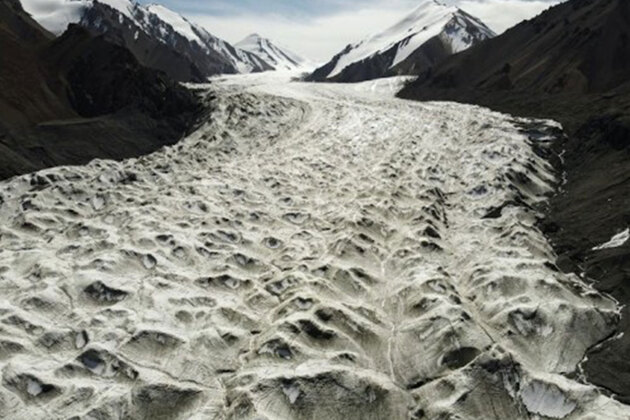
Stockholm [Sweden], October 6 (ANI): The Stockholm Center for South Asian and Indo-Pacific Affairs (SCSA-IPA) at the Institute for Security and Development Policy (ISDP) has released a new Stockholm Paper titled 'Wither Tibet in the Climate Crisis Agenda?'. The publication brings together more than twenty international experts to examine the Tibetan Plateau's accelerating ecological breakdown and its far-reaching implications for Asia's water security, regional stability, and global climate governance, the release stated.
The study warns that the Tibetan Plateau, often referred to as the 'Third Pole,' is warming at more than twice the global average. Its glaciers are retreating, permafrost is thawing, and grasslands are degrading, threatening the delicate water systems that sustain nearly two billion people across South and Southeast Asia. Despite this planetary importance, Tibet remains largely absent from international climate diplomacy, including the UN Framework Convention on Climate Change (UNFCCC) and successive COP negotiations, the release said.
According to the Stockholm Paper, the ecological crisis in Tibet is inseparable from governance and development choices. China's state-centric model of infrastructure expansion, militarization, and resource extraction has transformed one of the world's most fragile environments into a zone of extreme ecological stress. Massive construction of highways, railways, airports, and hydropower dams, many of them dual-use for civilian and military purposes, has disrupted permafrost layers, fragmented alpine ecosystems, and displaced local populations.
The report documents that Beijing's vision of 'ecological civilization' masks a pattern of environmental degradation, information opacity, and limited accountability. Military-driven construction and high-altitude exercises are intensifying pressure on already unstable landscapes, while secrecy surrounding environmental data prevents meaningful global assessment.
One of the paper's most urgent concerns is the hydropower expansion on the Yarlung Tsangpo (Brahmaputra). The proposed Medog mega dam, estimated at over USD 160 billion, symbolizes the ambition to convert Tibet into a hydropower superbase. Experts warn of heightened risks of seismic disturbances, landslides, and irreversible damage to downstream ecosystems in India and Bangladesh. The absence of transparent impact assessments or data-sharing mechanisms amplifies fears that water could become an instrument of geopolitical leverage, the release added.
Parallelly, the exploitation of critical raw materials such as lithium, copper, and rare earth elements has turned Tibet into a hub of strategic resource extraction. These materials are vital for global green energy transitions, yet their extraction in Tibet occurs with minimal environmental regulation and exclusion of local voices. The Stockholm Paper describes this as 'extractive colonialism,' a process in which the costs of global sustainability are borne by one of the planet's most vulnerable ecosystems. The resulting pollution, deforestation, and cultural displacement undermine both environmental justice and human security.
The human dimension of Tibet's transformation is equally severe. Since 2000, close to one million Tibetans have been forcibly relocated under programs justified as ecological protection or poverty alleviation. Many have been resettled multiple times, often without fair compensation or sustainable livelihoods. These relocations, together with demographic engineering and assimilationist education policies, erode cultural identity and weaken the traditional stewardship that has preserved Tibet's high-altitude ecology for centuries.
Despite Tibet's decisive role in regulating Asia's water and weather systems, global responses remain muted. Political sensitivities surrounding Chinese sovereignty have constrained international dialogue even as environmental thresholds are being crossed, the release further stated. The Stockholm Paper calls for Tibet to be treated as a frontline of the global climate emergency, comparable in urgency to the Arctic or low-lying island states. The plateau's stability is essential to monsoon patterns, biodiversity corridors, and continental climate regulation.
To address these challenges, the publication presents a Ten Point Framework for Global Action designed to embed Tibet within international climate cooperation. The framework proposes establishing transparent, independent monitoring systems using satellite and hydrological data under UN or multilateral oversight, developing formal transboundary water governance mechanisms including a potential Brahmaputra Basin Commission, strengthening climate accountability by tying green finance and trade to strict environmental and social safeguards, and integrating ecological obligations into military planning to curb the environmental toll of dual-use infrastructure.
It also recommends protecting cultural and linguistic heritage through UNESCO-led initiatives, ensuring Tibetan representation in global climate forums, recognizing displaced Tibetans as climate-affected communities under UNHCR mechanisms, and promoting renewable alternatives such as solar and wind energy instead of ecologically destructive mega dams.
Other proposals include embedding the Hindu Kush Himalayan ecosystem in UNFCCC, CBD, and SDG processes, countering misinformation and greenwashing by amplifying Tibetan and scientific voices, and empowering civil society and academic partnerships to document and disseminate evidence on the crisis.
Collectively, these recommendations aim to build transparency, accountability, and regional collaboration. The Stockholm Paper stresses that protecting Tibet is not a political act but an ecological imperative that transcends national borders. Its degradation threatens Asia's hydrological balance, undermines global carbon stability, and jeopardizes the livelihoods of nearly one-third of humanity.
As the world approaches COP 30, the publication urges governments, research institutions, and civil society to place the Tibetan Plateau at the core of international climate policy. 'Tibet must no longer remain the blind spot of global environmental governance,' the release emphasized, warning that the crisis unfolding on the Roof of the World is already shaping the future of water, food, and energy security across the Indo-Pacific and beyond. (ANI)
Get a daily dose of Vietnam Tribune news through our daily email, its complimentary and keeps you fully up to date with world and business news as well.
Publish news of your business, community or sports group, personnel appointments, major event and more by submitting a news release to Vietnam Tribune.
More InformationStockholm [Sweden], October 6 (ANI): The Stockholm Center for South Asian and Indo-Pacific Affairs (SCSA-IPA) at the Institute for...
Islamabad [Pakistan], October 6 (ANI): Pakistan and the United States are entering a new phase in their economic and strategic partnership...
London [UK], October 6 (ANI): Pakistan's transnational repression has intensified under Army Chief Asim Munir because of the absolute...
Colombo [Sri Lanka], October 6 (ANI): Australian pacer Megan Schutt was hailed by head coach Shelley Nitschke as an 'ultimate professional'...
Jakarta [Indonesia], October 6 (ANI/WAM): The death toll from the collapse of a school in Indonesia last week has climbed to at least...
Karachi [Pakistan], October 6 (ANI): As human rights abuses rise in Pakistan, 142 people have been killed under the guise of honour...
PARIS, France - France's new Prime Minister Sebastien Lecornu who was sworn in just a month ago, has resigned. The country's fifth...
SAN FRANCISCO, California: The parents of a 19-year-old college student killed in a Tesla crash have filed a lawsuit claiming she was...
WASHINGTON, D.C.: On the morning of October 2, as thousands of federal employees remained at home facing furloughs and the looming...
NEW YORK CITY, New York: A new PEN America report paints a stark picture of the ongoing book censorship battle in U.S. schools, revealing...
WASHINGTON, D.C.: The White House is pressuring nine major universities to sign onto President Donald Trump's political priorities...
LONDON, U.K.: Britain's Supreme Court ruled in April that under equality laws, sex refers to biological sex, meaning transgender women...